Be The Bison

Friday, November 22, 2024

Busting the Myth

You’ve heard it before, right?

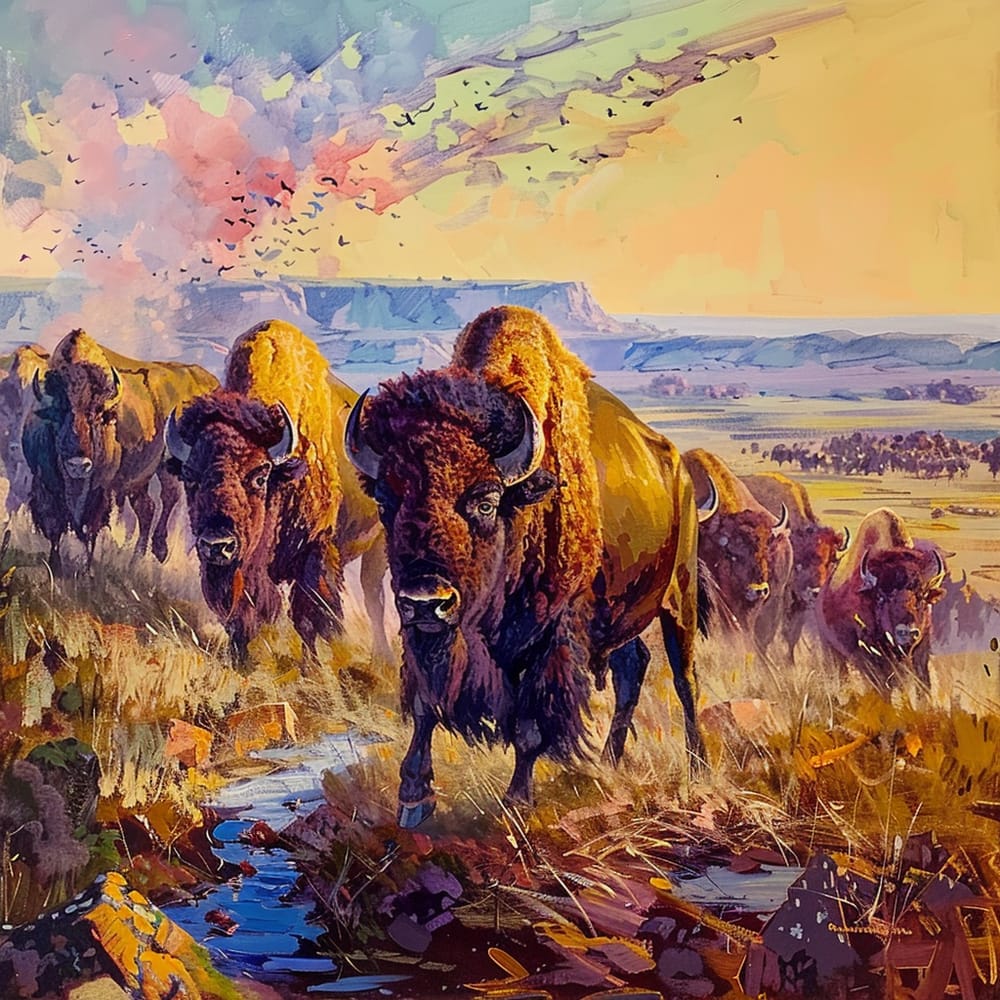
That neat little fable about bison charging straight into thunder storms, fearless and determined, teaching us all to face challenges head-on.
It’s motivational. It’s inspiring.
And… It’s mostly nonsense.
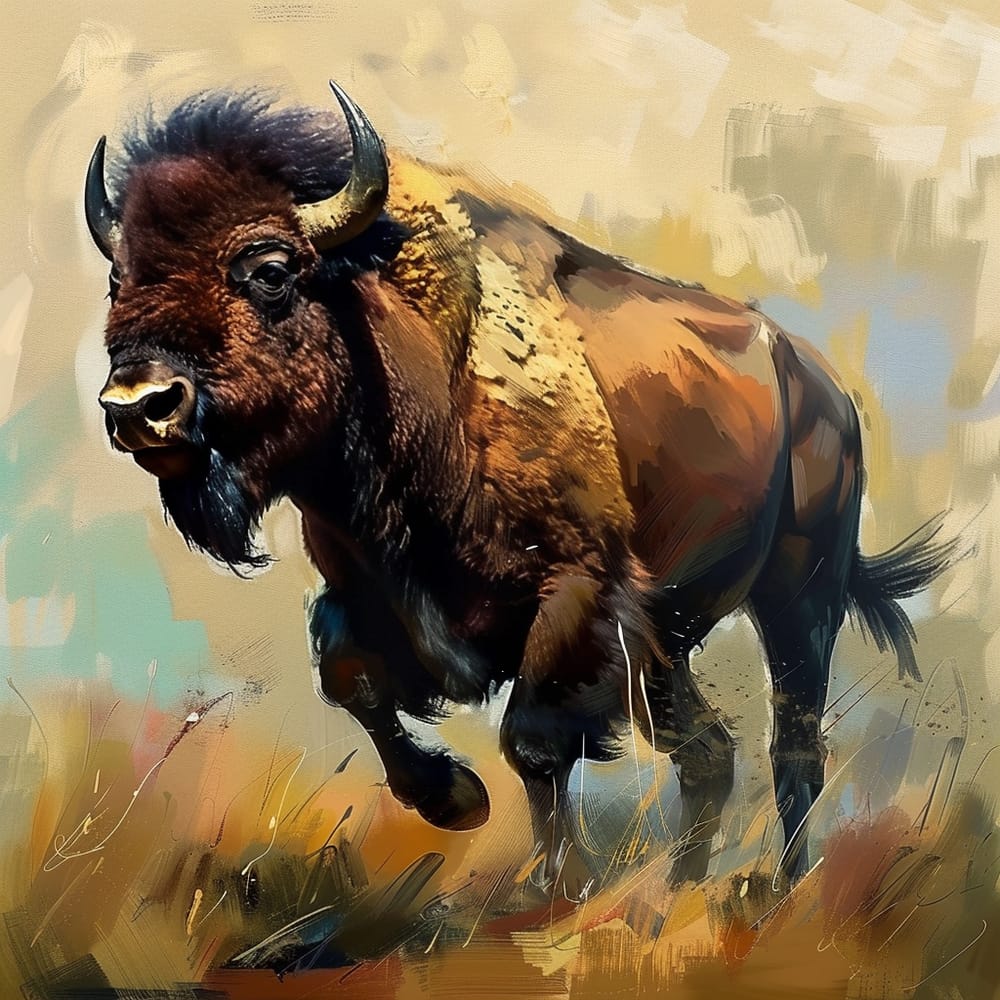
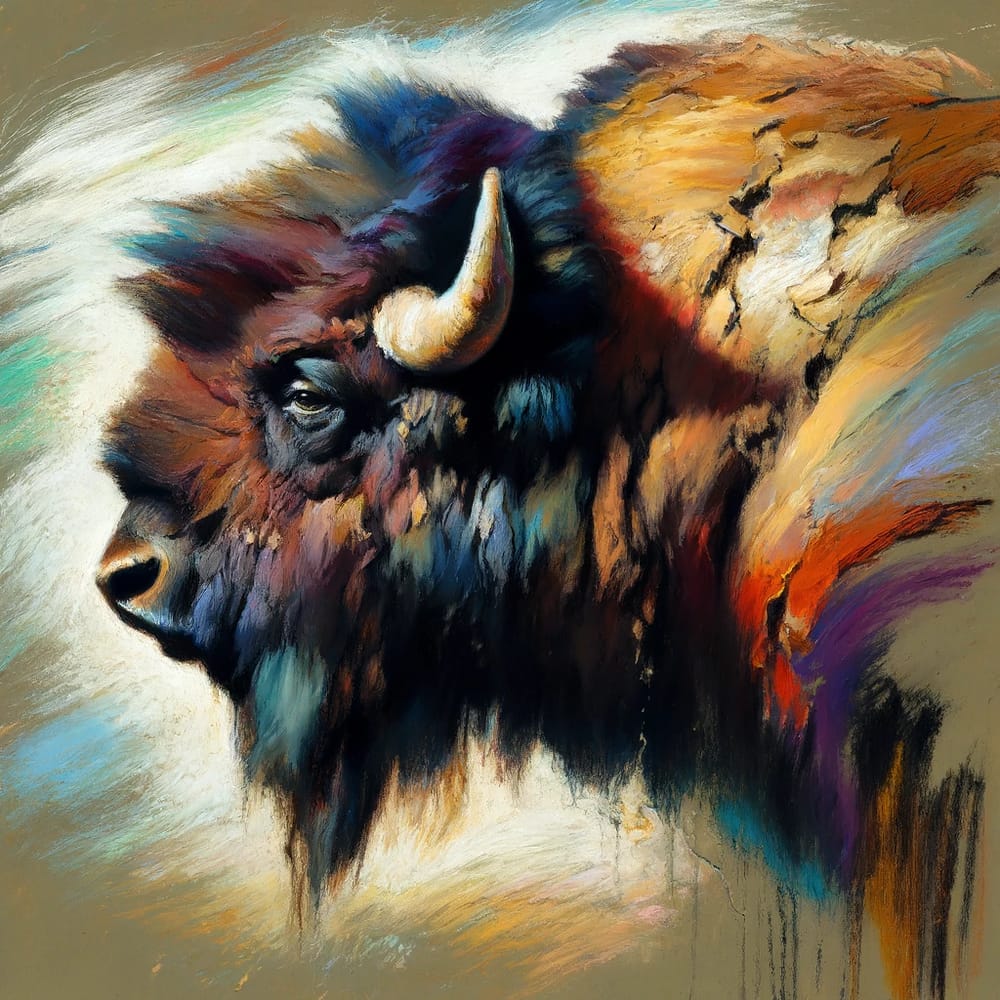
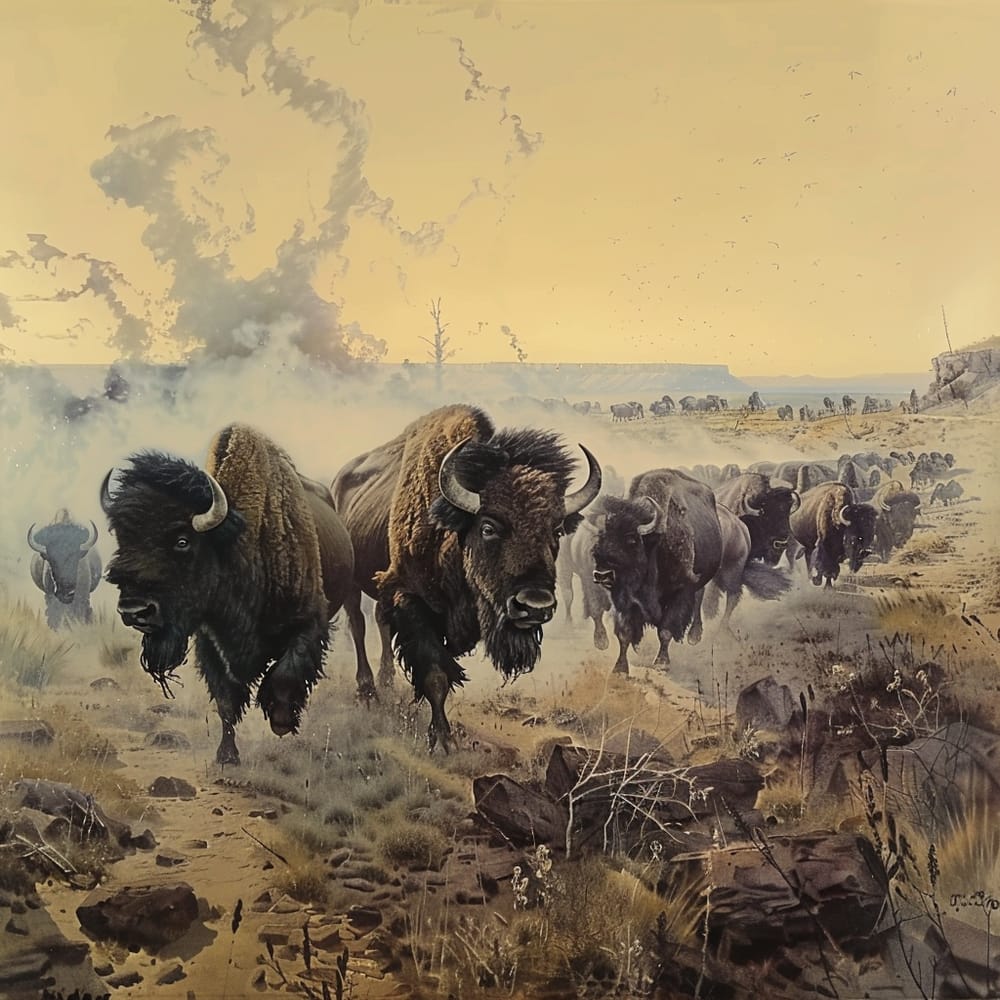
Bison don’t charge into storms. They usually just stand there, watching, calm and deliberate, as the storm rolls in. But the truth?
The truth is even better. It’s about something deeper, quieter, and far more powerful. Their strength lies in vulnerability and in the electric confidence of the herd—an energy that turns chaos and doubt into unity.​

Facing the Wolves: A Lesson in Vulnerability
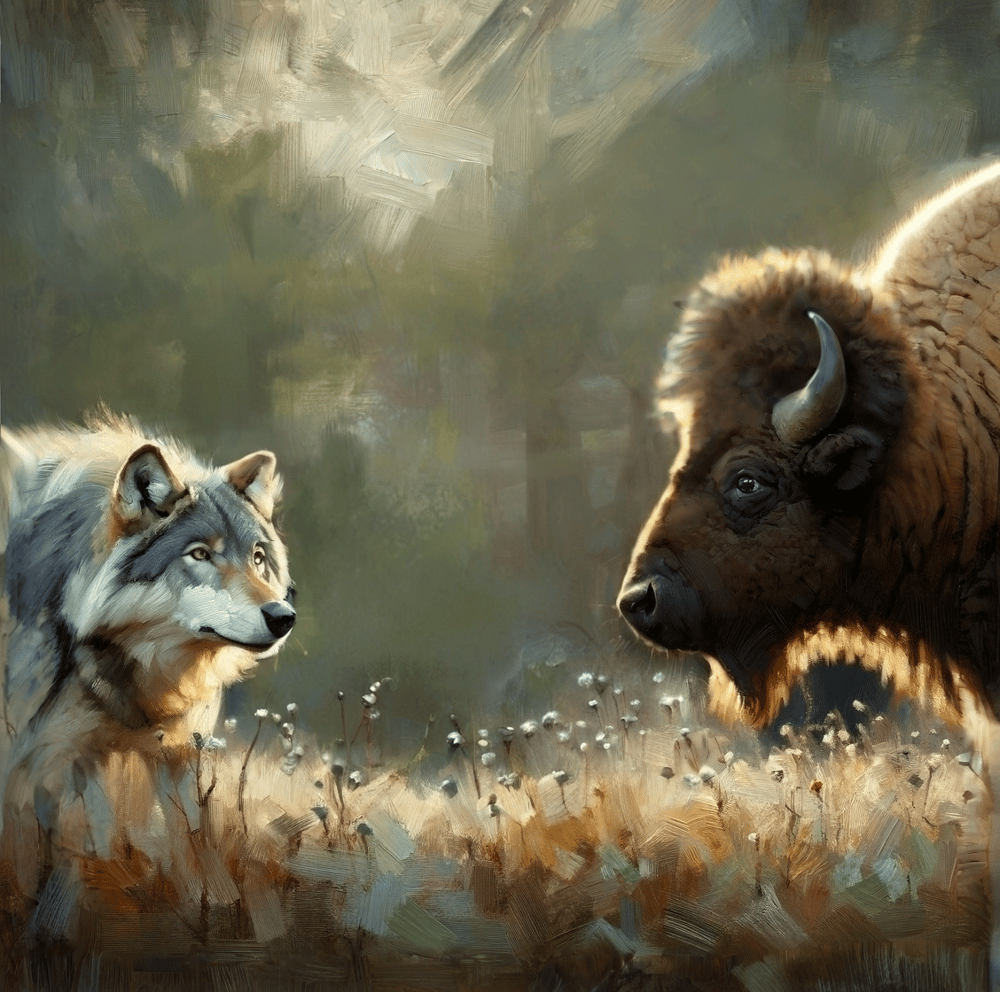
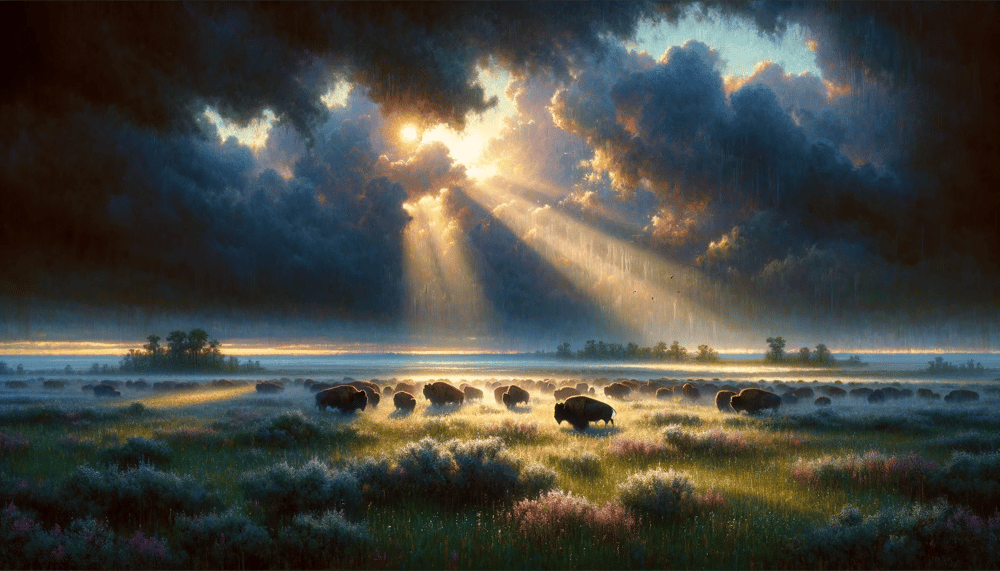
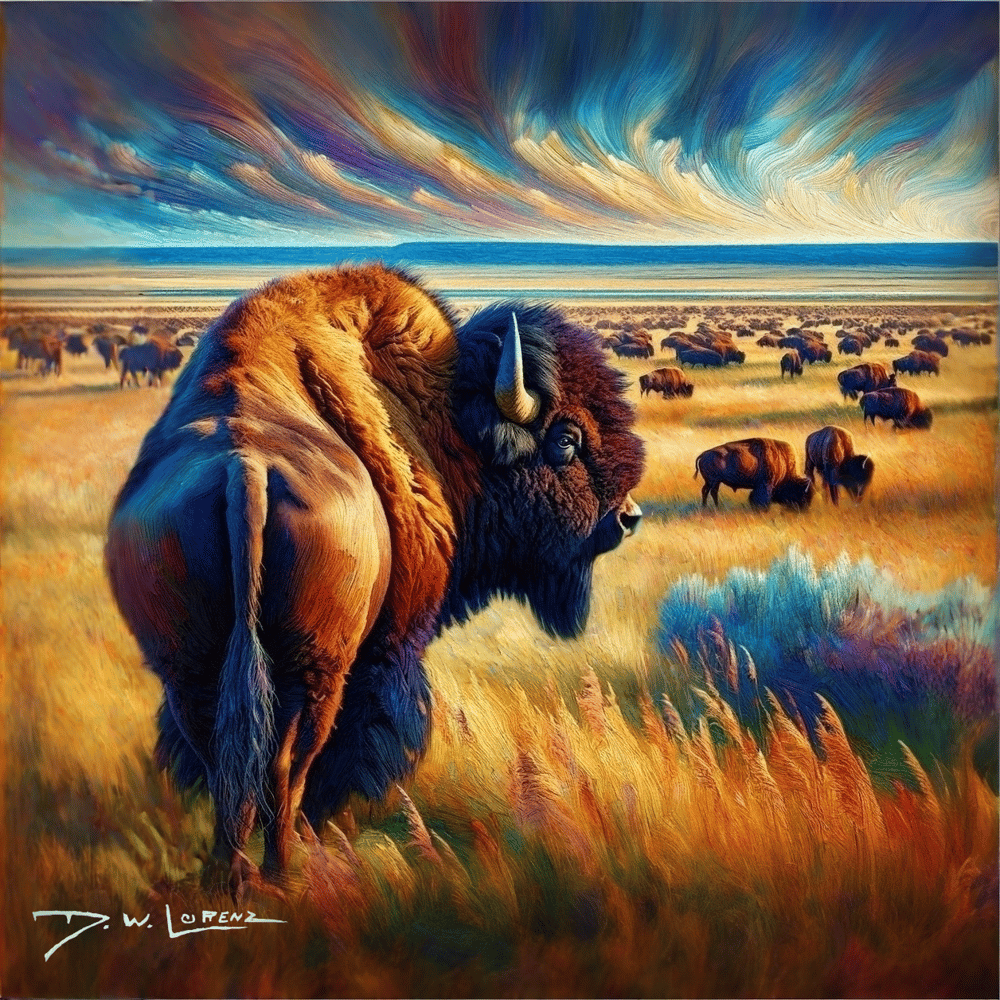
Dawn breaks over a mountain valley cradled by pines and sage, the golden light spilling across the grass, flickering on the drops of morning dew. The bison herd grazes in calm rhythm, their hulking forms blending into the horizon. Low, peaceful grunts rumble like the earth’s breath.

The sound of tearing grass and rhythmic chewing is hypnotic, as if the herd is harvesting the land’s renewal bite by bite.

On the edges of the herd, wolves linger, weaving through the tall grass like shadows that belong. Their movements are light and playful, tails high, paws dancing. They’re hunting, but not for bison. Their attention is on mice and rabbits, fleeing like tiny sparks scattering from the herd’s hooves as the bison graze, stepping on grass clumps and rubbing against the sage to scratch off their winter coats.
But then, something shifts.

Wolves Hunt Fear

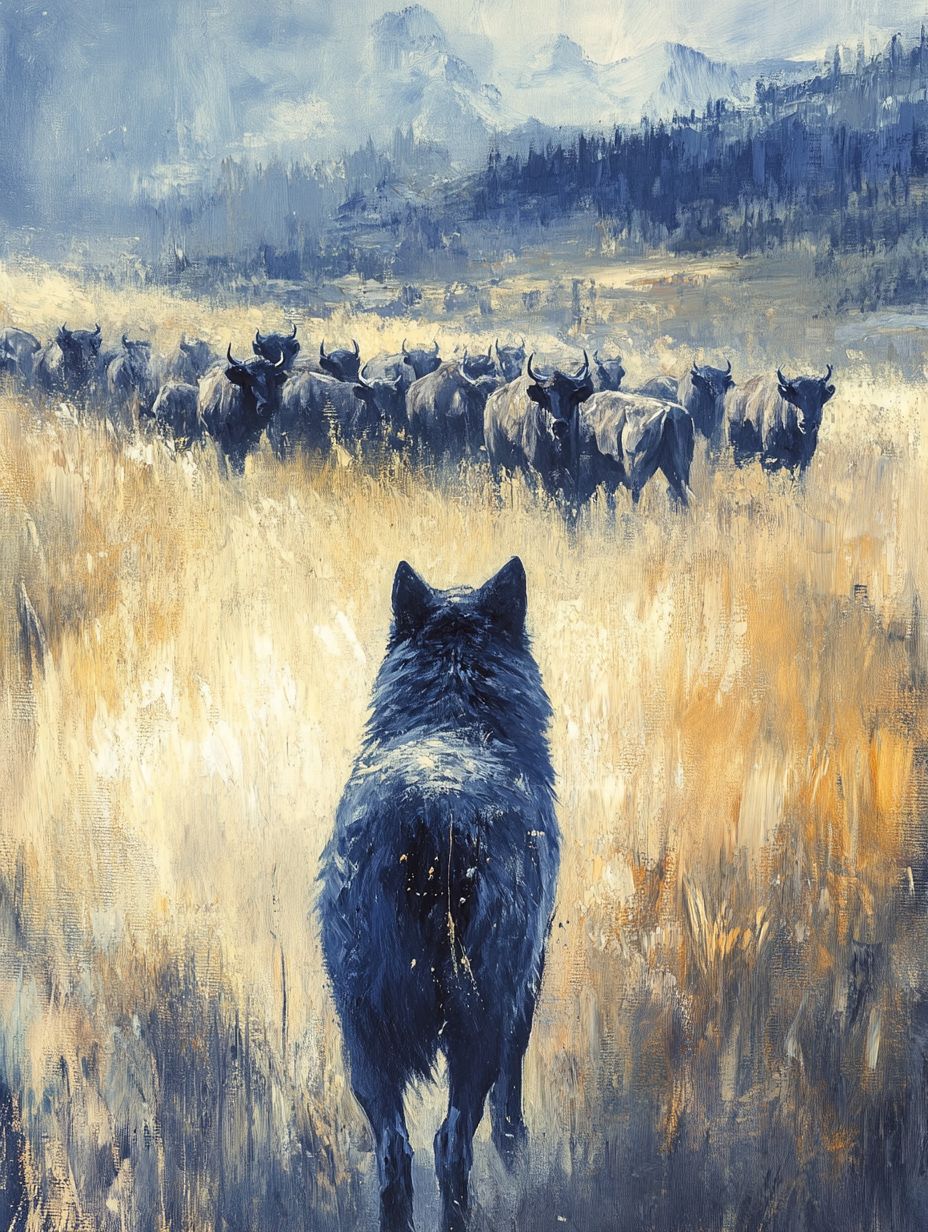
A single wolf freezes mid-step, its lean body taut as a bowstring. The sharp, piercing focus of its gaze locks onto a yearling bull grazing near the edge of the herd. A faint limp betrays the bull’s weakness; a subtle drag of one hoof, ribs just barely visible under its thick coat.
The wolf lowers its body, ears flattening. The pack catches the signal. Their playful energy vanishes, replaced by something ancient and primal.

And the bison? They feel it too.
Heads lift in unison, nostrils flare, and the calm rhythm of grazing snaps like a thread pulled too tight. A ripple of tension spreads through the herd, silent but electric. Hooves shuffle, tails flick, muscles coil.
The air grows heavy with the wolves’ shift from hunters of mice to hunters of bison.

The wolves don’t hunt flesh alone... They hunt fear.
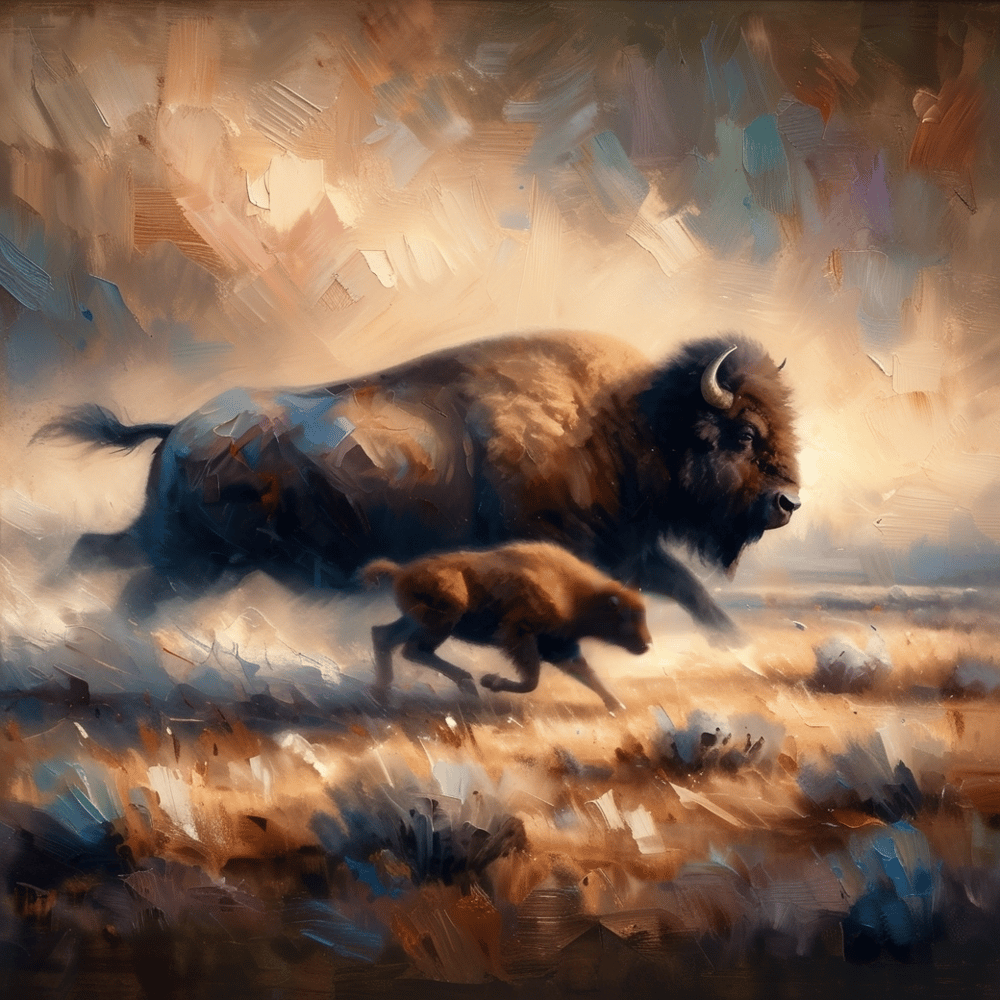
Their strategy is simple: create chaos, divide the herd, and isolate the weak. And for a moment, it works. The bison waver, their peaceful unity shattered. Then, in a rush, they bolt, massive bodies surging forward like a wave scattering in the storm.
​
​The wolves watch. They don’t all give chase. Instead, a single wolf moves, controlled and sharp, waiting for panic to reveal the stragglers. That’s when the pack will close in.
​But then, something extraordinary happens.

The Lone Bison Mother

Confidence that Inspires

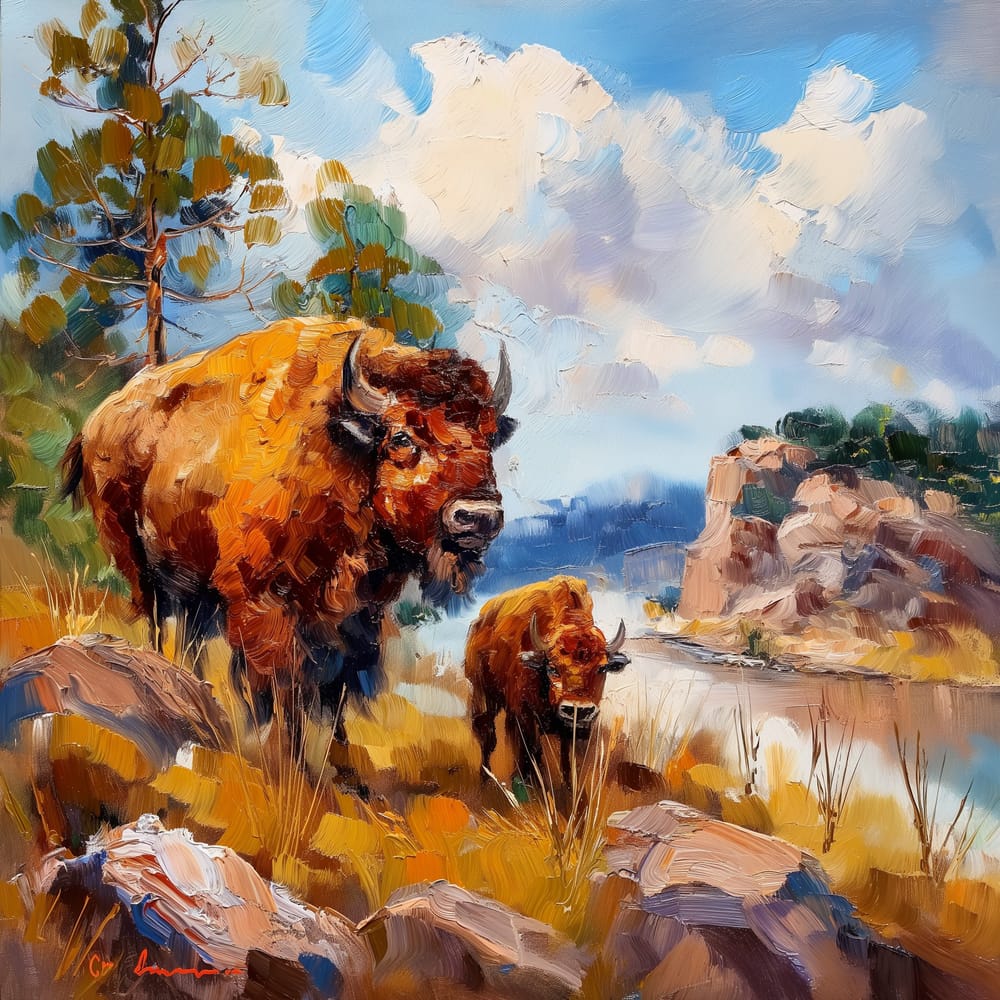
A lone bison mother raises her head, her gaze locking onto the wolves. Instead of following the fleeing herd, she turns and begins a confident, bouncing approach back toward the lead wolf.
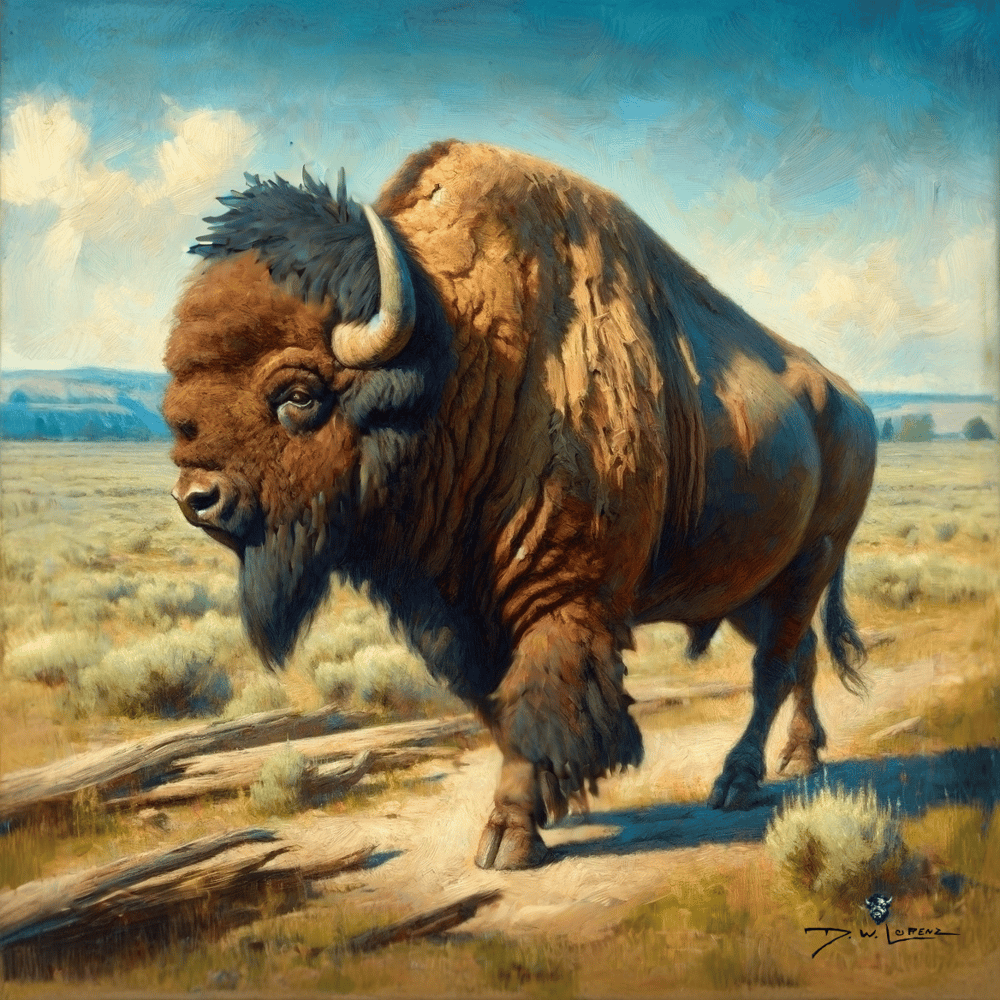
Her movements aren’t reckless or dramatic. They are deliberate, raw, and bold. Her dark brown coat ripples in the morning light as she plants her hooves firmly into the earth, one by one, with the gravity of intention. She lowers her head, her massive horns glinting like crescent moons. Her towering hump, a fortress of bone and muscle, rises like a mighty shield.
​Her stance speaks volumes: “Try me.”

The air thickens. The wolves pause.
The valley itself seems to hold its breath. Alone, the bison mother is vulnerable, but that vulnerability radiates power. It crackles through the grass like static, and it’s electric. The herd feels it. Without looking back, they sense the shift.

The panic gripping them moments ago begins to dissolve, replaced by something ancient and unspoken: trust. One by one, they slow. They turn, not with hesitation but with purpose, gathering behind her in silent unity.

Together, they form a wall, a fortress of muscle, horn, and resolve.
​
The wolves hesitate. Their power wasn’t in their teeth, it was in the herd’s fear. And now? That fear is gone.

The lead wolf takes a cautious step back. His pack follows, retreating slowly, their eyes locked on the bison. They can’t afford to flee, panic would invite a charge, and the tables would turn. Instead, they fade into the grass, conceding the hunt.

The prairie exhales. A crow perched nearby caws, its voice sharp, as if announcing the end of the standoff. No feast here today. The bison lower their heads, their calm restored, and return to grazing. The wolves vanish into the sage and pines, their hunt unfinished.
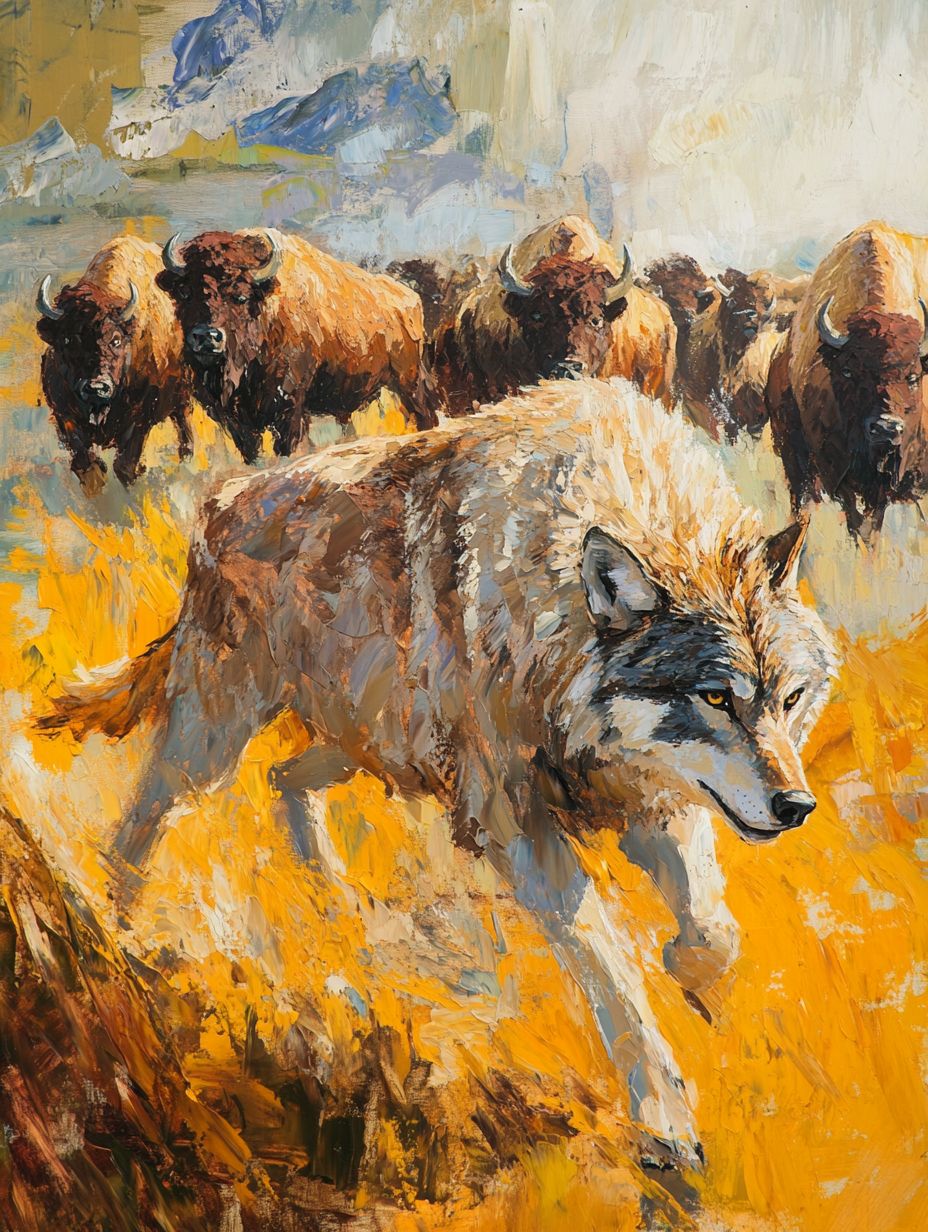
​And the herd? They graze as if it never happened, only the occasional bison lifting its head to glance back toward where the wolves retreated.
Leadership Lesson:
Vulnerability and Confidence Are Electric

What did that lone bison mother risk? Everything. Alone, she was vulnerable. If the wolves had called her bluff, and the herd hadn’t turned, she wouldn’t have stood a chance. But her vulnerability wasn’t weakness, it was power.
Her courage turned chaos into calm. Her confidence ignited trust.

​As a leader, that’s your role. It’s not about ego or bravado; it’s about stepping out, especially when the stakes are high and the challenges are great. Vulnerability is the spark that creates connection, the foundation of trust, and the energy that turns a group into a team.

The Risk of Stepping Out:
What If No One Follows?

What if you’re left standing alone, exposed, with the wolves closing in?

That’s the fear every leader faces, the one that keeps many from ever stepping forward.

But that’s the price of greatness.
Mediocre leaders blend into the herd, hoping someone else takes the risk. Great leaders step out, knowing full well that vulnerability is a gamble. They create the conditions for trust, connection, and momentum, even when the outcome isn’t guaranteed.

​In the wild, not all bison serve the herd.

​Some run for the edges, hoping to save themselves while others face the wolves. Their energy is selfish, disconnected. And the wolves know it. Those loners often become the next target.

Even within the bison herd, they’re nudged out, small jabs and pushes, a silent message:
“If you’re not with us, you’re on your own.”
Build Electric Trust and Accountability

Great organizations aren’t built on fear, they’re built on trust. The kind of trust that flows from leaders who care deeply about their people, their customers, and their mission. It’s the difference between surviving and thriving.
​In the bison herd, trust isn’t spoken, it’s felt. When the matriarch steps out to face the wolves, the herd doesn’t hesitate. They simply know. Her confidence becomes their confidence. Her courage becomes their strength.

Be the Bison

Lead with Vulnerability and Confidence

The challenge is simple: be the bison that steps out first. Take the risk. Stand alone if you have to, knowing that your vulnerability and confidence have the power to inspire. Don’t shy away from conflict, uncertainty, or change, lean into it.
That’s where greatness lives.

Next time you face a tough decision,

Ask yourself:
Will you blend into the herd, or will you step forward, even when it’s risky?
The reward isn’t guaranteed, but the possibility of greatness is.​

The Courage to Lead with
Vulnerability and Electric Confidence​

​Go out there and lead, not with noise or bravado, but with the quiet, steady strength of a bison mother who dared to stand alone and, in doing so, brought the herd the courage and confidence it needed.

Check out the Ranch Vision Achievement community page and let us know what you think of this article: Jokes welcome, everyone needs a bit of humor in their life. I don’t know if bison laugh, but they should.
What leadership challenges are you working on in your organization?